
Four-Way Rock Chops: Lesson 2
In this segment, I conclude your lesson in four-way coordination for rock drumming (see Related Links sidebar if you missed Four-Way Rock Chops: Lesson 1.) Once you've perfected the two-way coordination exercises from the first installment, it's time to add the third limb.
Using the Hi-Hat in Straight Rock
Although there are numerous hi-hat patterns you can practice, I've listed the three most common rock-based
hi-hat patterns in Example #1.
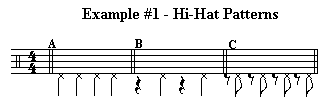
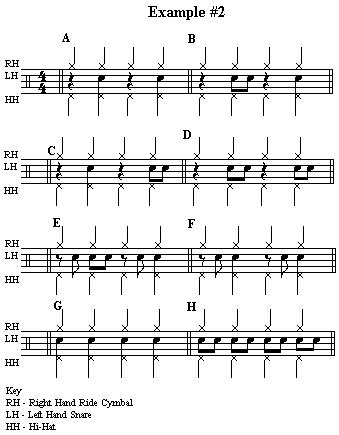
Practice each hi-hat pattern separately until you can play each one easily. Then, apply each of them to the exercises in Example #2. The example below shows what the exercises look like using hi-hat pattern A from Example #1 and using the straight quarter-note ride cymbal pattern (see Four-Way Rock Chops: Lesson 1 in the Related Links sidebar for more ride cymbal variations).
Using the Hi-Hat in the Rock Shuffle
You can apply the same three hi-hat patterns from Example #1 to rock shuffle exercises, except that you must
"interpret" the straight eighth-note pattern (in exercise C from Example #1) as if it were made up
of dotted eighth rests followed by sixteenth notes. See the comparison in Example #3 below.
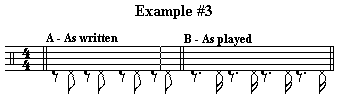
Apply each of the three hi-hat patterns in Example #1 to the rock shuffle exercises in Example #4 below ("interpreting" the straight eighth-note pattern in exercise C from Example #1 as explained above).
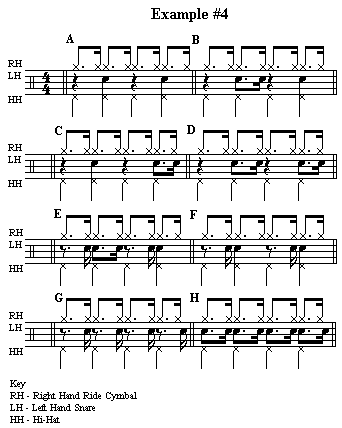
Once you can play the above exercises with ease, the final step is to add some kick drum patterns and you'll have four-way coordination.
Four-Way Coordination
Now that you've got the hands coordinated with the hi-hat, the final step is to add some kick drum patterns.
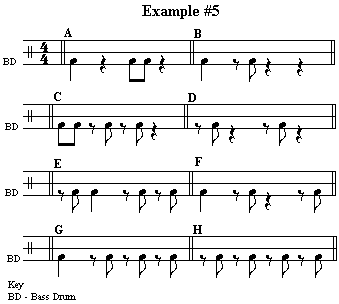
Example #5 lists some basic patterns used in straight rock. Take these and apply each one to the straight rock
exercises in Example #2. Play the exercises at a slow tempo until they become second nature. Then you can
increase your speed.
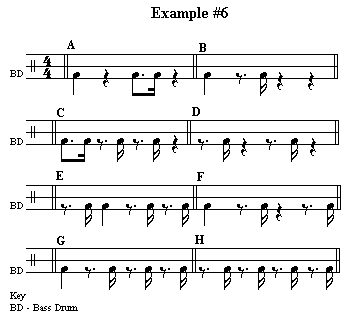
Example #6 lists some basic patterns used in rock shuffles. Take these and apply each one to the rock shuffle exercises in Example #4. Again, play the exercises at a slow tempo until they become second nature. Then, increase your speed.
For Further Study
If you worked on Four-Way Rock Chops: Lessons 1 and 2, you should have a good basis for four-way
rock coordination. For additional practice, listen to music, write down the rhythms that the drummer is
playing, and add them to your practice routine.
You should also choose rhythmic patterns from various drum books and apply them to your four-way coordination studies. If the particular pattern sounds good, keep it. If not, try something else. This type of practice is not only good for building overall coordination, but it helps develop your creativity.
The key to four-way coordination, whether for rock, jazz or another musical style, is to practice as many different combinations as you can. Then, when you're on the gig and you think of something cool to play, you should be able to play it without affecting what your other three limbs are doing.
Until next time: Stay loose.
Click the following link for Four-Way Rock Chops: Lesson 1!