
Tiger Reading 102
Part Two: How to Read Drum Music
The last segment was the first in a series of free music lesson articles for drummers that I will intersperse now and then, along with the usual features. You'll learn how to read and interpret drum charts, how to improve your chops and coordination, and how to make the most of your drumming practice time. In short, you'll learn everything you need to know to become a good drummer, whether you're interested in turning pro or playing for your own enjoyment. If you missed the first installment, check out Tiger Reading 101 (see sidebar). If you're ready for part two, let's get started.
Time Signatures Revisited
In the last lesson I left you with a Time Signature Table to complete. You can compare your answers to those
below.
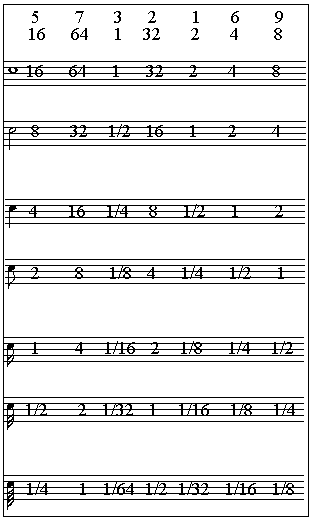
How did you do? If you're having trouble, review "Tiger" Reading 101. If you're still having problems, drop me a note and I'll try to help you out. Once you understand how to use the Time Signature Table, you'll easily be able to break down and understand the oddest of time signatures. Use it whenever you run across one that gives you trouble. (For practice in reading odd time signatures, I recommend the following instruction books: Odd Times by Joe Porcaro - This is a good study for the entire Drum Set, Odd Time Reading Text by Louis Bellson - An oldie but goodie: Both the book and Louie, and Portraits in Rhythm by Anthony J. Cirone - An excellent orchestra snare drum study. See Drum Books for Further Study in the sidebar.)
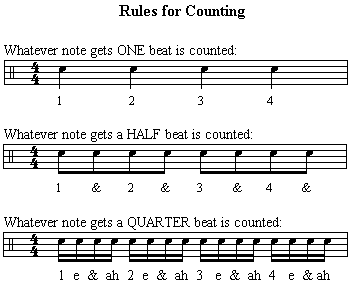
Once you've learned the rules for Time Signatures, the next step is to learn how to count music.
As Easy As 1 e & ah
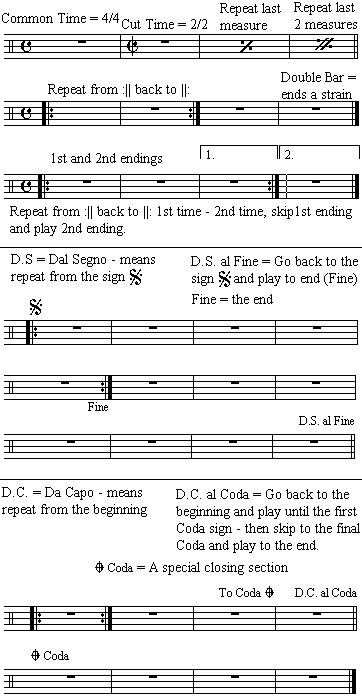
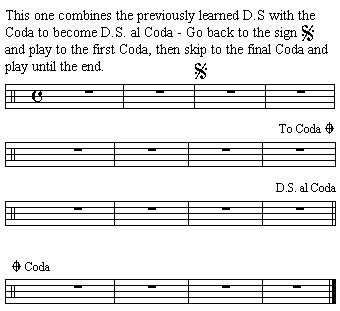
More Stuff You'll Need to Know
The best way to practice reading music when you're starting out, is to count out loud and use a metronome to
keep you on a steady course. After a while, you'll find that counting (even silently to yourself) becomes
unnecessary, as you'll begin to memorize the common rhythmic patterns and play them automatically.
Ted Reed's Syncopation is one of my favorite books for beginners and, as you'll see in later lessons, it can also be used in many creative ways by advanced players. I suggest that you pick up a copy and one or two of the others I've recommended (see the Drum Books sidebar). But before you go off to the woodshed, here are a few more musical terms and definitions you'll need to know.
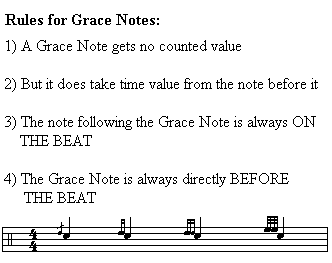
Grace Notes
It's important to become familiar with Grace Notes because you'll see them used in all kinds of music from
jazz to rock to rudimental to orchestra. If you've ever played flams, drags, or ruffs, then you've played
Grace Notes.
Although you still need to learn the rules for dotted and double dotted notes, ties, triplets, abbreviations, and a few dozen tempo markings, dynamics, and other assorted musical terms, you should have enough to keep you busy until our next lesson.
For now, I suggest that you memorize the various rules and definitions we've covered in the past two articles, pick up Reed's Syncopation, and start practicing. The only way to get good at reading, is to read – Every day. Even if you only have five or ten minutes to devote. In the long run, it'll make a big difference in your sight reading ability. And before you know it, it'll be time for "Tiger" Reading 103!
Stay tuned and keep practicing. (And for those of you who are STILL wondering what the heck "Tiger" Reading means, check out my bio.)
Until next time, stay loose.
Click the following link for Tiger Reading 103!