

Tiger Bill Reviews
The Drummer's Guide to Reading Drum Charts
By Steve Houghton
VHS Tape
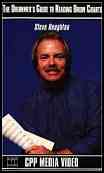
Do drummers really need to learn to read music? Steve Houghton says no, it's not necessary...unless you'd like to get more work! Who wouldn't? And Steve knows what he's talking about. He gets plenty of work.
I first met Steve at the American Federation of Musician's Local 47 in Los Angeles. It was 1979 and Steve was rehearsing with the Toshiko Akiyoshi Big Band. I remember being impressed with his reading skills back then - Toshiko writes some challenging music. So, when I heard that Steve had done a video on reading Drum Charts, I had to check it out. Read on to find out if I think it's worth your while - and your bread.
More Important Than Reading?
Steve brings up a good point early on in The Drummer's Guide To Reading Drum Charts. He feels there are
some things more important than reading. Things like time, style, and feel. Right on. Have you ever known
drummers who could play their butts off until they sit behind a Drum Chart? And then they sound like first day
drum students. No groove, no feel, no nothing! What happens is they get so caught up in reading the chart that
they totally forget the most important thing - the overall GROOVE! If that's happening, it doesn't matter
whether you're cutting every note on the chart. If you are cutting every note on the chart but the groove's
not there, you'll loose the gig!
This video does not teach you how to read music, so if you're reading is not good, refer to my Tiger Reading series of Free Drum Lessons.
What the video does do is teach you how to read (a better word might be interpret) Drum Charts. Steve explains what you'll see on every standard Drum Chart: Tempo markings, style indicator, dynamics, and accented figures. Then he breaks down chart reading even further, explaining the differences between playing accented Section Figures and Ensemble Figures. This is valuable info for beginning and seasoned drummers alike.
Included is a handy little booklet that gives you written examples of the most common accented figures you're likely to come across. And although Steve explains "when" to use setup drum fill-ins in front of the accented figures, he assumes you already know "how."
If you don't know how to fill-in around standard accented figures, you'll need to get a good book that gives you examples of Drum Breaks and Fill-ins.
Multi-Stylist
To become the best drummer you can be, Steve recommends that you become a multi-stylist along with your
reading skills. You should become equally adept at playing charts in (at least) Rock, Latin, and Jazz styles.
The included booklet also contains actual Drum Charts for you to play along with. Throughout the video Steve plays these charts and portions of them to explain by example. (He is joined by Tom Warrington on Bass and Bill Cunliffe on keyboard.)
A Practical Guide To Drum Chart Interpretation
Steve covers his Eighth Note Concept, Right Hand Lead, Jazz Phrasing, Articulation, and Chart Analysis. Also
included are techniques for playing a Soli section, explanations and examples of how to interpret badly
written Drum Charts, and tips for playing with brushes.
Steve offers advice such as listening to what the other musicians are playing while reading. This allows you to fill-in whatever the composer may have left out of the Drum Chart. Also covered are the basics of interpreting Master Rhythm Parts, Lead Sheets, and the type of charts used in radio and TV work. Steve even explains how to approach a gig like "The Tonight Show," where you're expected to Play-On and Play-Off the guest stars. His Blowing Vamp demo (where the band repeats a rhythm figure while the drummer solos) also contains some nice stuff.
The Bottom Line: Is It Worth It?
Steve covers a lot of ground in his video and, if you haven't already guessed, I really like it. What took me
(and countless others, including Steve) years of trial and error to learn, is all rolled up into a neat little
48-page booklet and video for you.
Steve has done a great job on the presentation and I even have to applaud the camera work. It never once gets in the way.
If you're looking to improve your Drum Chart Interpretation skills, and you already understand the basics of reading drum music, you'll save yourself lots of headaches on the gig by buying and "shedding" The Drummer's Guide To Reading Drum Charts. It's well worth the retail price of $39.95.
Purchase this VHS tape at a discount, please note that this video is not yet available in
DVD format, click this link: Drummer's Guide to Reading Drum Charts [VHS]
Stay loose!
Tiger Bill