
Four-Way Jazz Chops: Lesson 2
If you've been practicing the previous lesson, you should have become fairly comfortable coordinating your right and left hands by now. (If you missed it, check out Four-Way Jazz Chops: Part 1 in the Related Links sidebar before you work on this one.) This time, we'll be adding the feet.
Three-way Coordination
Take a look at the exercises in example #1. You should recognize them from last week (with the exception of exercise I, which I through in for free). The difference is that we're now adding your foot on the hi-hat.
Practice each of these 10 exercises separately until you can play each one with ease. Then, start from exercise A and play them all the way through to exercise J. You'll probably find it more difficult to do this but this will improve your coordination tremendously.
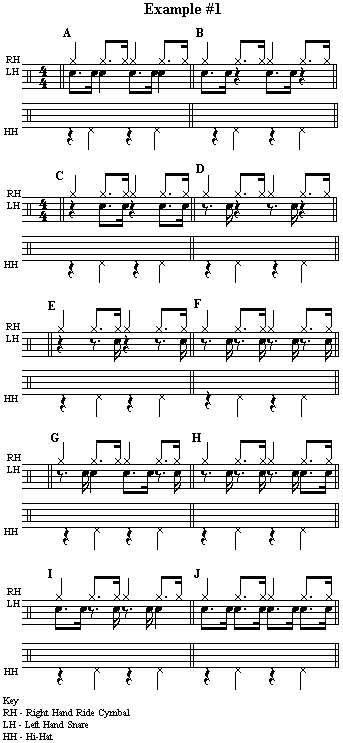
How are you doing so far? Don't rush it. Take your time and play each exercise slowly and evenly until you feel relaxed with each one. Only then should you increase the tempo. Once you master these three-way coordination exercises, you'll have a much easier time adding the fourth part - the kick drum.
Four-Way Coordination
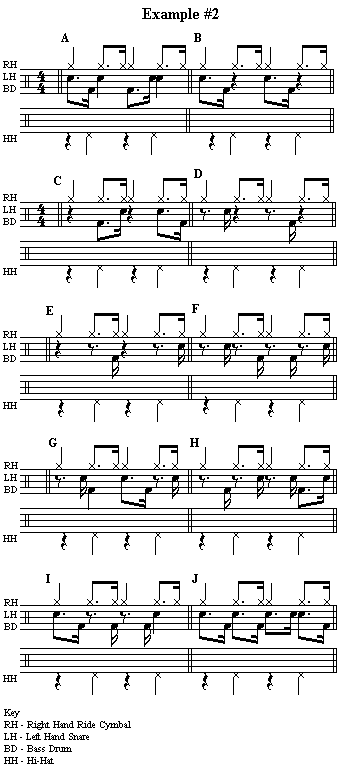
Once you become comfortable with three-way coordination, it's time to add the fourth part. Look at the exercises in Example #2 below. You'll notice that they consist of the same rhythmic figures as the exercises in Example #1 on the previous page, except that the left hand part is now split up and played between the snare and kick drum. This transforms these exercises into a totally different animal. Try them out.
Repeat each exercise at least 20 times before moving on to the next. Once you can play each of the exercises separately, try playing them once or twice each and moving on to the next one without stopping between each exercise. Play them straight through this way from A to J. You should also practice playing them in reverse from J to A. For more practice, try jumping randomly from one exercise to another.
Just remember to keep the tempo flowing smoothly and don't stop between exercises. You'll find that these exercises will greatly increase your ability to play your own ideas when you're behind the kit.
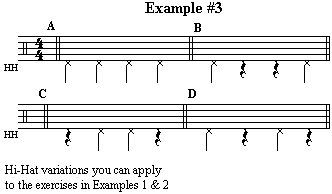
Once you get the previous exercises down, here's a little something extra you can play around with in your spare time. Example #3 (below) contains 4 alternate hi-hat patterns that you can substitute in the exercises in Example #2 above.
By applying each of the 4 hi-hat patterns to each of the 10 exercises, you'll have 40 more coordination exercises to work on. You can also apply these hi-hat patterns to the exercises in Jim Chapin's book. If you don't already have his book, you should get it. (See the Related Links sidebar).
It Don't Mean a Thing, If It Ain't Got That Swing!
A final important note. Although it's important to practice exercises like the ones I've shown you over these past two lessons to increase your four-way jazz chops, don't forget that the whole idea of playing jazz (or any style of music) is to make the music cook. If it don't cook, it ain't music! Not to me, anyway. So along with the mechanical exercises it's important for you to play along with music. You don't need an expensive sound system to do this. Just get a cheap pair of headphones and plug them into a CD player or even a radio. Sit down behind your drums and play along. Use the exercises I've given you and make up your own but make them swing.
There are jazz drummers who have had great feel and no chops, as well as those who have had great chops and no feel. But the greatest jazz drummers in the world are the ones who have feel and chops. It is possible to have both. It just takes the proper kind of practice.
Until next time: Stay loose.
Stay tuned for the re-release of Tiger Bill's Classic Double Bass Drum text: DoubleDrum - Coming Soon!

Click the following link for Four-Way Jazz Chops: Part 1!